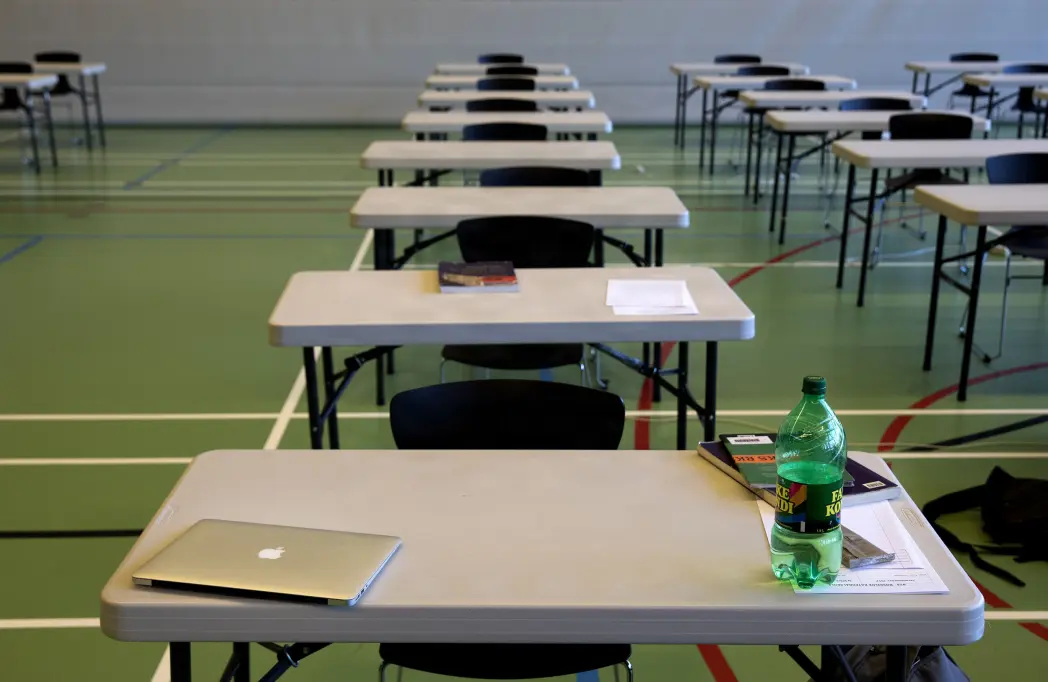


– Anxiety is basically the body’s alarm response. It arises as a natural reaction to situations that we experience as demanding or potentially threatening. In many cases, anxiety can be helpful because it sharpens our attention, increases our focus and enables us to react quickly and appropriately in stressful situations. When we talk about exam anxiety, it is precisely this alarm reaction that is activated in connection with an exam.
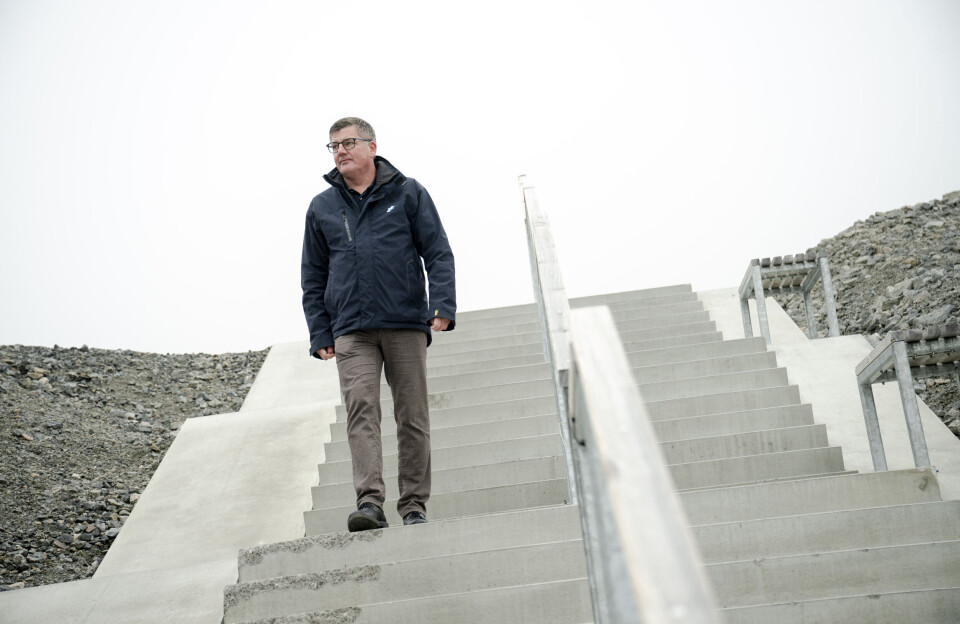
– For some, the condition is motivating and can help mobilize energy and concentration, but for others, the anxiety becomes so intense that it inhibits the ability to show what one is actually capable of, says Caroline Lund, a psychologist and daily manager of Qinngorneq, a national psychotherapy service for students above the primary school level.
Performance under pressure
Qinngorneq – which is part of Inulerivik – the new national therapy and counselling centre – is represented in the five largest educational cities.
Caroline Lund herself is based in Sisimiut, and has courses with students both in person and online.
– It is important to emphasise that exam anxiety in itself is not a problem. It is a natural part of having to perform under pressure. Many students experience exam nervousness, and this is completely normal – regardless of how well prepared they are. Exams are a situation that few people like because they involve assessment and evaluation.
According to Caroline Lund, you should therefore not work on eliminating nervousness completely, but on learning to understand and deal with exam anxiety so that it does not become too dominant.
– When exam anxiety takes up too much of your time, it can also affect your preparation. Thoughts can revolve more around worries than about the material itself, which makes it more difficult to work effectively with the material.
You need to challenge your thoughts
Working with exam anxiety is largely about developing appropriate strategies to keep it at a level where it is manageable and not controlling.
– We know from research that the better you know the causes of the anxiety, the better you can act on it. One of the most important things is to become aware of your thoughts and start challenging them. Thoughts can create feelings that affect our behavior and the way we act. For example, these can be self-critical thoughts that you are not good enough, or that things will go completely wrong on the exam. These kinds of thoughts can help create a feeling of anxiety and affect your body by causing heart palpitations, stomach aches, sweaty palms, or the like. This can lead to people putting off their studies, spending a lot of time worrying instead of studying, or over-preparing. In some cases, it can also lead to people failing exams or, in the worst case, dropping out of school, says Caroline Lund.

But you can actually train yourself to replace self-critical and negative thoughts with more realistic thoughts, which can change both your feelings, your body's reaction and your behavior.
A cognitive diamond
Within psychology, we talk about the cognitive diamond as a tool that can be used to understand an anxiety situation and the interaction between thoughts, feelings, body reactions and behavior.
– It is also helpful to talk to someone about the anxiety you are experiencing. We usually say in Qinngorneq that difficult thoughts often become easier when you share them. In this context, you can tell your teacher or lecturer that you are nervous or perhaps anxious about the exam. It can be reassuring that they know this so that they can take it into account during the exam.

Breathing exercises
Another strategy that can reduce feelings of anxiety is also simple breathing exercises, which can help the body calm down. It may seem like a cliché to mention, but research suggests that this can help calm the nervous system. It is also important to prepare well - the better you know your subject, the easier it is to perform.
– But if you are so hampered by exam anxiety that it affects your studies and your well-being, for example by failing to show up for an exam, then you should contact your study advisor or apply for a psychotherapeutic course at Qinngorneq. We are here to help the students, says Caroline Lund.
In addition to the offer of individual psychotherapeutic courses, Qinngorneq also offers online professional sparring and supervision for study advisors, and this May the topic is exam anxiety.
Inulerivik offers online courses about anxiety at Mindhelper.gl, where you can also get various techniques to create more peace in everyday life.
This article is from the education newspaper, which can be read for free via the link here.