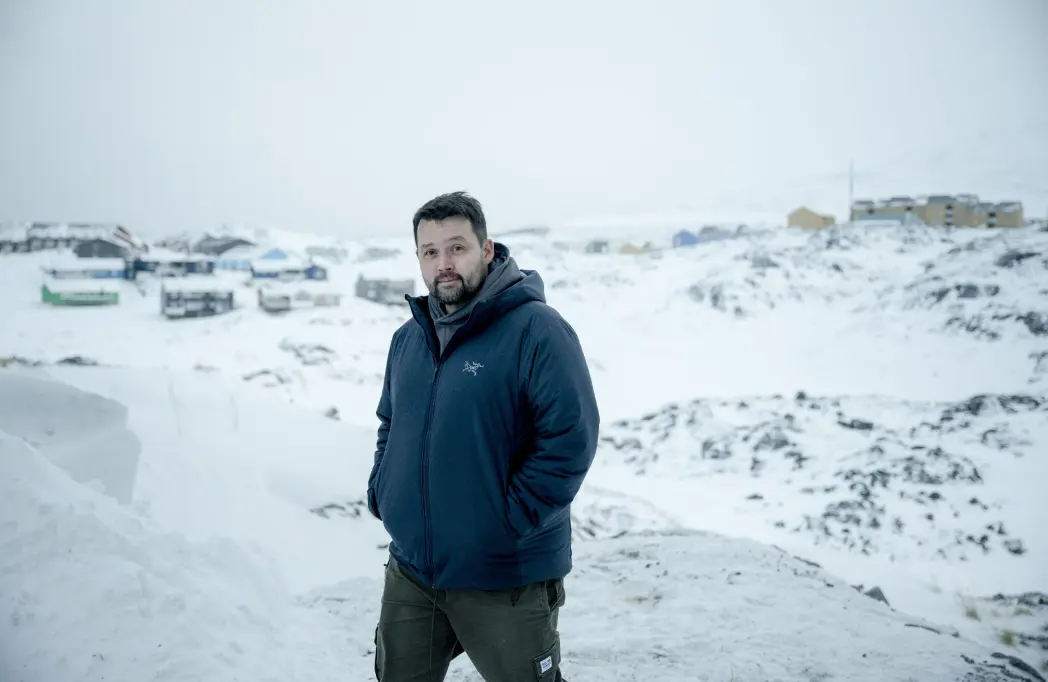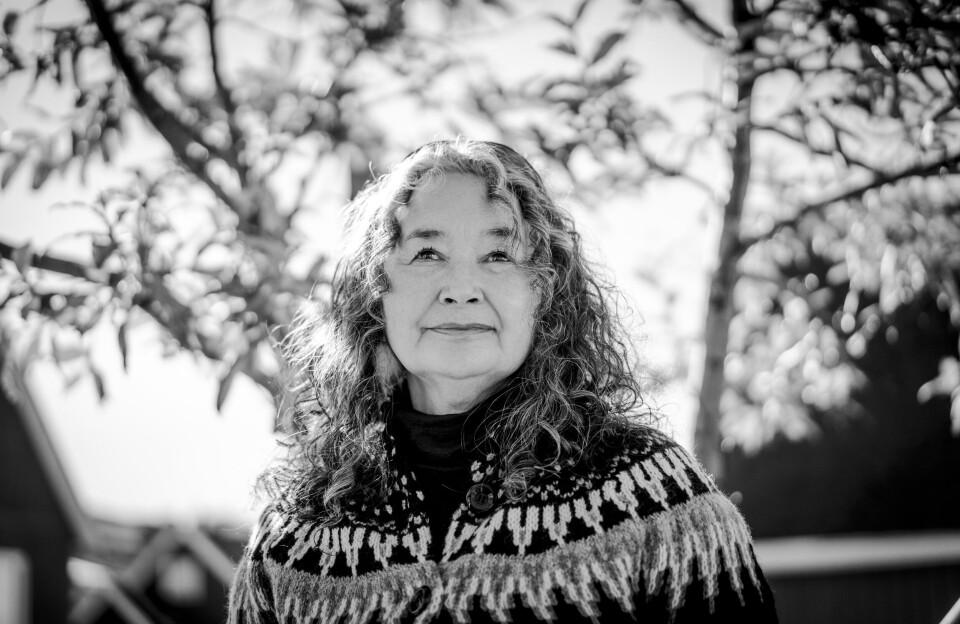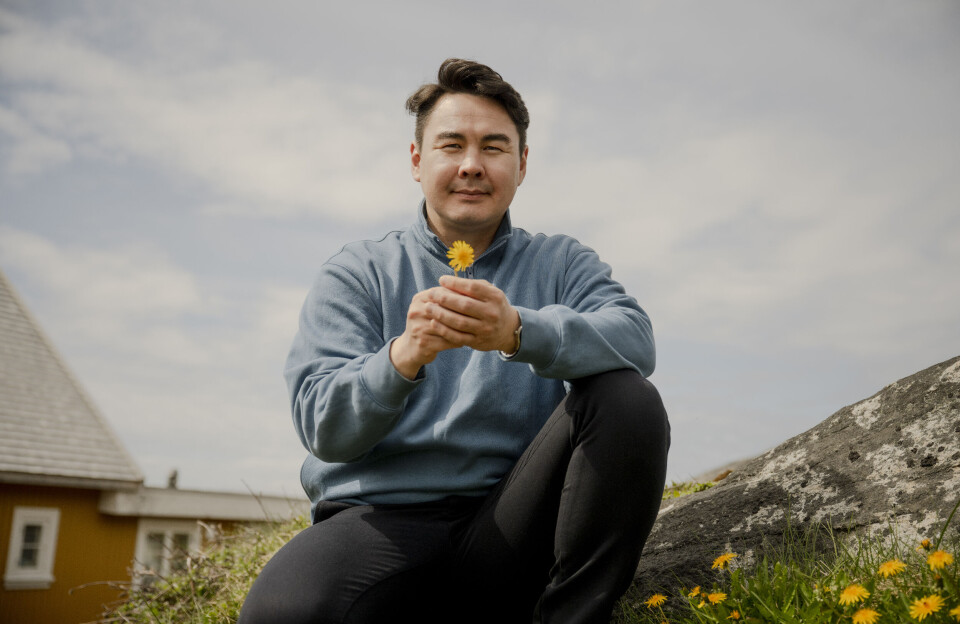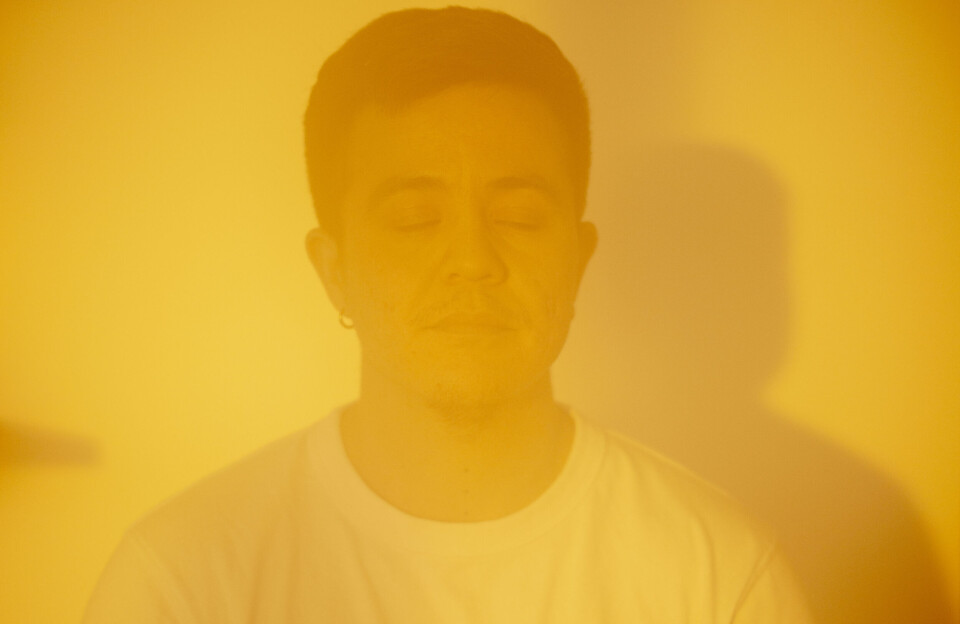

Miko Kongstad was born and raised in Qaqortoq. As a baby, he was given a different name, a girl's name that didn't fit the man he always felt like. His journey to find himself is about much more than his new name. It's a story about finding your true identity, about playing on the right court – not just on the badminton court, but in life.
Childhood and badminton
Childhood and badminton
Miko started playing badminton at the age of six, and it quickly became his passion. His parents are divorced, but Miko experiences great care and support from both sides, and he grows up in two loving homes, where he never doubts his worth. Both parents support not only his badminton career, but also his ability to be who he is. He spends many hours in the badminton hall, where he finds his own world.

- I've always been good at sports, but badminton is something different. Here I could really immerse myself, it was something I quickly fell in love with, says Miko.
At the age of 11, he competes in his first championship. At that time, his hair is short and blue. However, the championship does not go as hoped – he loses all his matches, and this disappoints him deeply.
"I came home and told my dad that I didn't want to lose anymore. Next year, I'll win," Miko says with a laugh, remembering that time.
And he lives up to his promise. The following year, Miko wins gold in singles, and his triumph marks the beginning of a career where he always strives to get better. The will and determination that drives him on the badminton court is the same strength he takes with him throughout life – on and off the court.
The first trip to Denmark
At 18, Miko travels alone to Hillerød to pursue his dream of badminton. He starts at Frederiksborg Gymnasium, precisely because there is a badminton academy in the city. Here he trains at the academy in the morning, before classes, and in the afternoon at the local club. It is a new world for Miko – both challenging and encouraging.
- There was a big difference in the level in Denmark compared to what I was used to in Greenland. Suddenly I was no longer the best, but I could feel that the development potential was enormous, says Miko.

The three years at high school are a time when Miko puts everything else aside for badminton. He focuses on the sport and quickly moves up the championship ranks, where in 2008 he becomes Danish champion in U19 singles and doubles. But right after he has received his high school diploma, the injury strikes. A cruciate ligament injury in 2011, which puts an abrupt end to his career.
"I was playing in an international tournament in Croatia, where I represented Greenland. In the middle of my third match, I destroyed my knee," says Miko and falls silent.
The injury gives him time to reflect and feel.
- I was very unsure whether I should return to badminton. I hadn't changed my gender yet, and that meant a lot. Sport is so gendered, so during the injury I was in a severe identity crisis, says Miko.
Badminton has always been his love, but he has never felt comfortable in the form-fitting women's national team jerseys, in the gender-segregated world, not to mention the locker room, which has been a constant space of uncertainty and discomfort.
Who is Miko?
The first ACL injury in his left knee is followed by a second one, two years later, in his right knee, during the Island Games in Bermuda. That injury doesn't just stop his physical journey. It cuts deeper than the knee and sends Miko on a long and dark journey of identity crisis. It's a rupture that's not just about the sport, but about everything he thought defined him.
- My second injury was a turning point. I had to accept that badminton was no longer my path. It was a relief, but at the same time I lost a part of myself. The whole world I had built up crumbled, and it really sent me down a long way mentally, says Miko with a serious look.

The injury not only marks the end of Miko's badminton career, it also opens a door to something bigger. Without the gender-normative demands and expectations that have characterized the sport, he begins to find a new path. For the first time, he breaks free from the strict framework that has held him back and can begin to define himself outside the gendered boxes that the sport has always placed him in.
One of the little things that sticks out in his memories is one of his former coaches who had a penchant for abbreviations and nicknames. He started calling him "Mi-ko," a contraction of his former first and last name. At the time, Miko didn't think much of it, but today he sees it as an unconscious encouragement, a small step towards being seen as who he really was. Miko slowly feels that his journey towards finding himself has begun. It is in this time of vulnerability and uncertainty that he slowly begins to find the strength needed to live authentically.
The transition
Miko stays in Denmark for several years. He first starts at the Technical University of Denmark to study civil engineering, but never finishes his education. Instead, he moves to Aarhus and starts studying geology, a course with a strong focus on Greenland, and the longing takes shape. Miko feels his roots calling him, and after his studies he decides to return home. Here a new chapter begins, and Miko is hired as a badminton coach at the GUX sports line in Nuuk. But the return home comes with a price. Miko has always known that he will transition to a man. But for trans people like him, it is a long and lonely road. In Greenland, where he returns, there is no systematic support – neither hormone therapy, operations nor psychological help are available.
- I always knew I had to transition. I never doubted it, but in Greenland there is no one to help. It is as if you have to find your way all by yourself, and it is incredibly difficult, says Miko, when reflecting on his time in Greenland.

But Miko finds his own way, and in the fall of 2020 he changes his name. As fate would have it, the nickname Miko is already a registered name, even a unisex name. It feels both appropriate and safe, like something that is truly his own. But when it comes to gender-affirming treatment in healthcare, the reality is completely different. Miko quickly faces the wall of limitations and realizes that he has no other options but to leave his country in order to become who he is.
A few months after his name change, Miko takes the plunge and moves to Denmark. But the path to his goal is far from easy. Just before the summer of 2021, he travels to Sweden, where he can have the top surgery he has longed for many years. The surgery is a success – a crucial turning point that marks a new beginning in Miko's life.
"When I looked down at myself and saw my flat chest, I felt a happiness I've never experienced before. It was like a heavy burden had been lifted," says Miko, breaking into the biggest smile.
The new freedom and physical relief after the operation were not only a relief, but also a confirmation of his choice. Seven months later, he began hormone therapy, a treatment that makes him whole, but which at the same time binds him to Denmark. Hormone therapy requires lifelong follow-up – something that Greenland simply cannot offer. Therefore, Miko Schiøtt Kongstad cannot return home to Greenland.
On home ground
In 2023, Miko will return to the badminton court – this time on the right half of the court, as the man he has always been. For many years, he was undefeated as the best female badminton player in Greenland, and his name was well-known nationally. But now he represents himself – as who he really is. It is a symbolic, but at the same time very concrete, return for Miko: from playing on the wrong side to being fully authentic in his sport and in his life. The first match back will not be a sporting victory, but a personal triumph – proof that he never gave up on himself, and that his journey towards self-realization has been what has driven him on. However, he will only participate in the men's doubles once – a symbolic act that marks an important step in his life, but not necessarily a return to the sport full-time. It is not a new career, but a statement, a moment where Miko is on the right side of the net – on the right side of life. Today, Miko has put his athletic life behind him, but has combined his working life with the sport he has always loved. He works as a consultant for Badminton Kalaallit Nunaat, a job that allows him to visit and travel in his home country and work with the sport that has shaped him.

- I want to show that badminton is for everyone – big and small, boys and girls, and everything in between, says Miko with a smile that shows his dedication to the sport.
In his role, he gets closer to his roots, and he thrives in the Badminton Association, where he can both share his knowledge and experience how the sport can bring people together across Greenland.
Forerunner
After struggling to find his own identity, Miko is now working towards political change. When he is back home in Greenland, he has taken on the role of a spokesperson for transgender rights. Among other things, he has had conversations with relevant politicians and associations about the necessary improvements that are needed to ensure better conditions for transgender people in Greenland.
"I am not only fighting for myself, but for those who come after me. No one should feel forced to live a life in the shadows. I want to help ensure that we get the rights we are entitled to and that future generations do not have to fight the same fight," says Miko.

But Miko is not only fighting for society – he is also fighting for himself. Looking ahead, he has gained a whole new understanding of life.
- Before I transitioned, I couldn't imagine myself in a future. Now I can dream again, and I look forward to growing old. What awaits, I don't know, but I believe it will be good things, says Miko and sighs under his breath, as if his shoulders are lightening.
Miko has transformed his own fear of the future into a driving force for change. His journey is about much more than finding himself – it is a fight to give others the courage to stand up and live authentically. One day, he also hopes that this fight will give him the opportunity to return home – as he is – to a Greenland that has room for everyone.
Abonnementer
Sermitsiaq.gl - web artikler
- Adgang til alle artikler på Sermitsiaq.gl
- Pr. måned kr. 59.00
- Pr. år kr. 650.00
Sermitsiaq - E-avis
- Adgang til Sermitsiaq e-avis som udkommer hver fredag
- Adgang til alle artikler på Sermitsiaq.gl
- Pris pr. måned kr. 191
- Pris pr. år kr. 1.677
AG - Atuagagdliutit E-avis
- Adgang til AG - Atuagagdliutit e-avis som udkommer hver onsdag
- Adgang til alle artikler på Sermitsiaq.gl
- Pris pr. måned kr. 191
- Pris pr. år kr. 1.677
Sermitsiaq.AG+
- Adgang til AG - Atuagagdliutit e-avis som udkommer hver onsdag
- Adgang til Sermitsiaq e-avis som udkommer hver fredag
- Adgang til alle artikler på Sermitsiaq.gl
- Adgang til Arnanut e-magasin
- Adgang til Nutserisoq.gl
- Ved interesse send en mail til abonnement@sermitsiaq.gl
Kære Læser, Velkommen til Sermitsiaq.gl – din kilde til nyheder og kritisk journalistik fra Grønland. For at kunne fortsætte vores vigtige arbejde med at fremme den frie presse og levere dybdegående, kritisk journalistik, har vi indført betaling for udvalgte artikler. Dette tiltag hjælper os med at sikre kvaliteten af vores indhold og støtte vores dygtige journalister i deres arbejde med at bringe de vigtigste historier frem i lyset. Du kan få adgang til betalingsartiklerne fra kun kr. 59,- pr. måned. Det er nemt og enkelt at købe adgang – klik nedenfor for at komme i gang og få fuld adgang til vores eksklusive indhold. Tak for din forståelse og støtte. Dit bidrag hjælper os med at fortsætte vores mission om at levere uafhængig og kritisk journalistik til Grønland.